Enterprise Initiatives

This blog focuses on Enterprise IT topics such as Enterprise Architecture, Portfolio Management, Change Management, Business Process Management, and recaps various technology events and news.


Showing posts with label twitter. Show all posts

I have spent thirteen years in the loyalty marketing industry and have seen some amazingly complex algorithms for targeting consumers based on all kinds of criteria. There are lost shoppers, top shoppers, brand switchers, brand loyals, and various other categories of consumers that brand managers try to reach out and communicate to. Social media is changing the way that brand managers need to think. Check out this interesting presentation I stumbled upon on Slideshare today.


What is interesting is that consumers are in total control of when and how they receive advertisements and incentives. We have Tivo to fast forward past commercials, popup blockers to block adds, and we have the power to choose not to go to web sites covered with advertising. So now, brand managers must listen to their consumers and coexist within their networks. This is changing how we view loyalty. Brand managers need to reach out to social networks that have a large following of loyal community members. If they can get a well known person within a social network interested in their brand, many others will follow. When people like popular blogger Robert Scoble talk about a product or service it takes on a viral effect. When Scoble and the folks at Techcrunch started slamming Twitter and talking up Friendfeed when Twitter was crashing several times a day, huge numbers of loyal community members followed. Some of these popular bloggers have as much of an impact as a product review in the New York Times.

So what does this mean for brand managers? Well it means they need to pay attention to a new kind of loyalty marketing. I call it social loyalty. No longer do the brand managers have a captive audience where they can spoon feed us whatever message they want. Now they have to cater to consumers, especially the popular leaders within social networks. The game is changing and the companies that are not paying attention are going get left behind.


I know the answer to this question. Because we always have. Can we put aside our age old habits of being herded into corporate offices like cattle to sit in cubes (I call them coffins) and try to find some piece and quiet so we can create that next document, model the next design, code the next service, or develop the next prototype? Speaking of old habits, why must our two main sources of collaboration be meetings and email? Many meetings are either about status or some person needs some information to solve a problem and invites everybody under the sun to help. Most of these types of meetings add value to very few people in the meeting at the expense of the others. Isn't it time for a change? As for email, nobody has a better story about ditching email then IBM's Luis Suarez.

Here are a few reasons why I feel that I am much more productive working remotely then at the office:

  1. Fewer distractions
  2. Fewer meetings
  3. More tools
  4. More accountability
  5. No hour lunches
  6. Better work/life balance
Let's discuss each one of these points in more detail:

Fewer Distractions
At the office, people are more willing to interrupt you because they can easily just walk up and ask you a question since they "know where you live". Just walking to get a cup of coffee can turn into a handful of hallway conversations, some work related, some not. When working remotely, people tend to reach out to you only after they have tried to actually find answers to their questions as opposed to just bugging the expert. Don't get me wrong, I love helping my fellow worker, but sometimes it is too easy to ask before people actually think.

Fewer Meetings
Less meetings does not equate to less collaboration. It means less scheduled interruptions. Now some meetings are necessary, but most meetings can be avoided if people were allowed to use collaboration tools to ask and answer questions. Instead of holding numerous meetings, I prefer to have ongoing conversations via some messaging tool (IM, chat, Twitter, etc.). If I really need to focus on a task I can mark myself as away. There are many interesting and free tools that I have been experimenting with that have virtual white boards, video conferencing, and chat all integrated into one platform. Google Groups is another way to set up a collaboration area for discussion threads, document sharing, and archiving.

More tools
Many corporations see tools like instant messaging, chat, Twitter, blogs, wikis and others as a security threat and block them. This is almost comical since everyone simply uses their phones to access these tools anyways. Wouldn't people be more productive using these tools on their computer then on their phone? (See my article called Security or Insecurity?) When you work remotely, you can use the tools of your choice to collaborate. Even if I was forced to use a locked down corporate laptop at home, I would fire up my own PC to get access to the tools I need to do my job.

More accountability
Some may disagree with me on this one. I believe that most worthy employees feel more obligated to focus and deliver because of the perception by management that working remotely allows people to screw off. I know that whenever I telecommuted, I sent my boss an email telling him what I expected to deliver and followed it with updates at the end of the day on what I accomplished. I felt privileged every time I worked from home and felt obligated to prove to management that I was providing value remotely.

No hour lunches
For me personally, a lunch break while working remotely, is the time it takes to get up from my desk, make a sandwich, and return to my desk (5 minutes). A lunch break at work is an escape from the daily grind at the office and usually takes an hour between the drive, ordering, getting served, getting the check, and driving back.

Better work/life balance
When I used to drive into the office every day, I would wake up at 6 to 6:30, catch up on my daily reading, and leave by 7-7:15am. Forty-five minutes and $10 of gas later, I would be at my desk by 8am. Typically I worked until 6-6:30pm and then spent another forty-five minutes and $10 in gas to get home. Now it is after 7pm. I have missed all of the kids sporting events and now its time to do help them with homework. Dinner fits somewhere in between and before you know it is after 9pm and you still have work to do before tomorrow. The cycle continues day in day out.

Now let's look at working remotely. I wake up around 7am. Catch up on my news and technology reading and start working by 8am. I work straight through until 6pm and am able to catch my kids soccer practice if I chose. We can get their homework done earlier, eat at a decent time, and still have time to play a game of Skip-O, tile rummy, or watch the Discovery Channel. Then, if I need to do more work after they go to bed, I am relaxed and feel like I am actually part of the family and not just part of their daily schedule. I also have a few more green backs in my pocket because I am not putting $75 in my tank every three days. Life is good!

Yes it can be done!
CIO.com is running a 3-part series on how a company named Chorus transformed their workforce to be entirely remote. If you look at the typical IT shop today, they are all leveraging some form of outsourcing, whether it is onshore, offshore, or both. In either case, there are a number of workers working remotely from some location other then where the IT shop is based. The irony is that these teams in other countries or in consulting firms within the states are all leveraging several of the tools that I mentioned above to effectively collaborate amongst themselves. I worked on a project recently where the consulting company had a few people onsite, some in Texas, Seattle, and Atlanta, and an offshore team in Macedonia. They were all productive from remote places across the globe. But mysteriously, telecommuting was frowned upon by the corporate culture. Don't figure! What message does that send to the employees of the company? Is it this message..."we trust our vendors to be professionals remotely, but not our own people...."?

Barriers for companies to embrace a remote environment
Having a handful of people working remotely is not a big deal. Mobilizing your workforce is. Part 2 and Part 3 of the CIO.com story about Chorus talks about the planning and the transition that they went through. Here are some of the barriers that I see that prevents companies from embracing remote work.

  1. Perception and resistance to change
  2. Requires capital and must be a priority project
  3. Needs business justification
  4. Requires good management and accountability
Perception/Resistance
Many people perceive that their employees just won't be productive away from the watchful eyes of their managers. For some people this may be true. Then again, why are you paying people that you can't trust? Other people just fear change or won't risk taking on any challenging project.

Capital and Priority
Like any other enterprise initiative, a project of this magnitude requires executive level support, a well thought out strategy and project plan, capital funds, and a high enough priority that the milestones can be achieved. Oh, and don't forget to address the human side of change.

Business Justification
If it is not good for the bottom line, then don't bother. That goes for any project these days. Whether the savings is in reduced leases, power consumption, reduced employee turnover, or whatever, you should never ask for capital without the appropriate justification. While you are at it, don't forget to collect metrics to show management at a later date that the investment was worth it.

Good Management and Accountability
To pull this off, you must work with human resources and put together a policy that clearly set expectations. These guidelines, often part of the employee handbook, should be signed by each person who will be working remotely. But the real key is management. If your management is not doing a good job of making their staff accountable today, good luck trying to make them accountable at home. Maybe the first question to ask is do I have the right management in place to pull this off?

And finally, once a company establishes a remote work force, here are some other advantages that they have.
  1. Hiring - no longer constrained to local markets
  2. Reduced travel expenses
  3. Opportunity to sell real estate assets
Hiring
I realized through my recent experiments with social networking that the recruitment world is much bigger then the local market leads you to believe. With a remote force, I can hire people anywhere in the country and even in the world if I have the proper controls in place. This gives me access to the top talent in the world, not just the top talent in my city. Think about that!

Reduced Travel
A lot of travel is required to hold various meetings with teams that are dispersed across offices. With the proper collaboration tools including video conferencing, virtual whiteboards, and integrated voice/chat, many of these meetings can be performed online. There will still be times where it is critical to have face to face time, but many meetings can be held more cost effective via the Web.

Sell real estate
IBM did this a few years back. Here is a great article from their web site that discusses the benefits of a remote workforce. If a huge company like IBM can pull this off, then there is no reason why any other company cannot. Here are the benefits that IBM gets from mobilizing their workforce.

Productivity. Outfitting employees with mobile technology makes your business more productive because it enables employees to work from home, in transit and while visiting customers, business partners and satellite offices.

Recruitment. The ability to hire the best talent regardless of where they live can give you a leg up on competitors that still rely on a local workforce. And because most potential recruits perceive telecommuting as a benefit, this can provide a considerable advantage to your business by allowing you to fill jobs more quickly. In addition, the business becomes more efficient because lower turnover means less time spent training new employees.

Real-estate savings. With fewer people in the office, real estate expenditures and associated energy costs can potentially be reduced.

Remote computing can also help you avoid the disruption of a major move during a crucial time of growth when the business needs to focus on quality execution. A flexible workforce, often associated with the teleworking model, can also accommodate short-term spikes in business. This enables your business to add office space more judiciously rather than simply reacting to short-term demands.

Business continuity. You never know what’s going to keep your employees away from the office: inclement weather, flu or even traffic tie-ups. When employees have remote access to IT systems, they can continue working no matter what happens in or around your facility.

So what do you think? Is the cost of gas and the improvements in social software making mobile commuting more of a reality then a fantasy? Is your company thinking about this now? I'd love to hear your story.


I want to share with you my personal experience with social software and how it changed my career for the better.

What is social software?
Social software is a subset of Web 2.0 that allows people to collaborate with other people over the web. Examples of social software are blogs, wikis, social networking sites (Facebook, LinkedIn, MySpace, etc.), instant messaging, chat, and a whole host of dynamic content sharing tools like YouTube, Flickr, Twitter, and many others.

My Professional life before social software
Before I entered the social networking scene, a had a very small network. I had been at the same company since 1995 and did not do a good job of networking with people from previous jobs. In reality, I was basically an unknown entity outside of the walls of the building I worked in. Sure a few vendors and a few consulting firms knew me, but they knew me as a customer only. Over the years I felt the need to pursue opportunities elsewhere to broaden my experience from both a technology and business standpoint. The problem was, I didn't have a network. The only people who knew about my talents where people I worked with and I couldn't let them know I was looking. So for the past five years I applied for job after job through the old channels (job boards, classifieds, etc.). Being on the hiring side of table for so many years, I knew that my chances of my resume getting through HR were as good as hitting the lottery. So I started a journey of improving my credentials by enrolling in back to back Masters programs (Masters in IT and MBA). This made me a highly educated IT professional with no network.

Life after social networking
About a year and a half ago, I started blogging. I started out under a nickname to hide my identity so I could speak my mind without getting myself in trouble, hence the name MadGreek. I quickly found out that blogging provided a way for me to form a great network which is what my career needed. At the time I probably had 15-20 LinkedIn contacts which meant I was not getting any value from LinkedIn (I now have about 240). As I invested more of my personal time blogging, I started collaborating with talented architects, industry analysts, and various other technical IT folks from around the world.

Then I discovered Twitter. I had messed with Twitter for a short while a year ago and didn't see the value. Earlier this year my network, which is several hundred people now, were talking a lot about Twitter. So I tried it again. This time I had a great network to follow on Twitter. So I started following architects, analysts, bloggers, and various interesting people and people started following me. At the same time I started learning so much about IT trends and technologies that my company had no idea about. Through Twitter, I landed several public appearances. I have done podcasts, web interviews, presentations at Gartner and Zapthink events, you name it. All of the sudden, I became a known entity. That was my missing link.

Then I took the big step!
Then I did the unthinkable. I resigned from my job of 13 years even though I did not have a job to go to. Am I nuts? Not really. By reaching out to quality people in my network, I have started discussions about job opportunities with 5 different companies in the last two weeks. I get emails constantly from people in my network with opportunities like VP of architecture, SOA lead practitioner, enterprise architect, and various others. Unfortunately, many of these jobs are not in Florida and require me to move, but some are consulting and others are virtual. I don't even look at the job boards anymore because it is a total waste of time!

In the driver's seat
So now I am sitting in the driver's seat. I have successfully marketed my own personal brand through blogging and public appearances. I know a lot of people in the industry who know a lot of important people. I can now choose the best possible opportunity instead of grabbing the first available job that I can find. I can choose to do something that I have a lot of passion and energy for which is research technology and emerging trends and help people with their struggles in delivering enterprise initiatives. All of this is possible because of the power of social networking. My advice to those of you who dread going to your job each day is get out there and start socializing. Stay clear of religion and politics, respect people's opinions, and enjoy the experience. Remember, recruiters can Google your name once you engage on the web.

It's not just for personal benefit
But social software also provides great benefits for corporations. The last two years I initiated and led a large SOA/BPM effort. These same tools that provided all of the personal benefits I mentioned above, also provided an incredible amount of value to our SOA project. Much of our research came from blogs and wikis. When I was preparing the RFP for the SOA stack, Eric Roch posted this gem. Over time I started collaborating more and more with sharp SOA experts like Eric, the guys from Zapthink, Todd Biske, Brenda Michelson, and many others. We shared real life stories about what has and hasn't worked on SOA projects, what things to think about, what to do and not to do, who the experts are on certain topics, etc. You don't get these types of conversations talking to vendors. They only tell you the good stuff and hide the scary stuff. I truly believe that if it was not for social software, our SOA initiative would not have been half of the success that it is. Now when people from my company attend web casts or conferences on SOA or BPM, they come away saying, "We already know all of that".

Collaborate or Die
In conclusion, those companies or individuals who shy away from social software will eventually render themselves irrelevant. Technology and business is changing so fast that if you don't get "out there" you will be lost in the ways of yesterday, and become as relevant as a Y2K developer. So get out there, build a network, learn from others, share your experiences so we can learn from you and revitalize your career!


There has been a lot of excitement around Web 2.0 technology lately. It appears that we haven't learned much from our Web 1.0 days, also known as the .Com days. These exciting new technologies allow for companies to quickly produce new web sites and easily extend existing web sites. The problem is people forget that to be successful in the long term, you still need a reliable and well designed architecture and you still need some form of governance to ensure that the end product can meet high levels of quality of service.

What do I mean by Quality of Service (QoS)?
In terms of web sites and software, when I talk about QoS I am referring to:

  • Uptime
  • Performance
  • Service Level Agreements (SLAs)
  • Minimal defects
  • Scalability
Nowadays, a web startup can quickly produce a service on the Internet at low cost. They can simply take advantage of the LAMP stack (Linux, Apache, MySql, PhP), leverage existing Mashups, and build robust user interfaces (RIAs) to produce a cool, eye candy web site that consumers can access for free. Unfortunately, quick is becoming quick-n-dirty.

Balancing Agility with QoS
Startups are faced with a dilemma. They typically have a limited amount of time, money, and resources. They need to get a prototype up and running quickly to give them an opportunity to go after VC funds. The defining moment comes when they get the funding and then have a limited amount of time to produce a Beta version soon to be followed by a real production version. This is where many startups miss the boat. Many prioritize speed to market over sound architecture design. It is a tough decision to make.
  • Do I spend a lot of time and money now and risk missing the window of opportunity?
  • Can I worry about scalability after I see how well received the web site is?
  • Can I afford to pay an experienced architect now or can I wait until we have more money and a good stream of traffic?
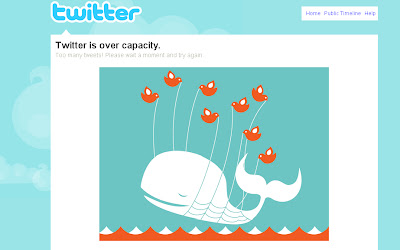
Many startups can get away with postponing some of the critical design aspects and target a later release of software to address QoS. But others have not been so successful. Right now, everyone is fully aware of Twitter's Fail Whale, a symbol of incompetence and a colossal architectural blunder.


From Web site crashes


Twitter had quickly become a rising star on the web with millions of users. In the April time frame their traffic spiked to a level beyond what their underlying architecture could handle. Now Twitter is the joke of the town and are victims of daily outages and performance issues. What we found out is that behind the scenes the baby is ugly. Twitter recently responded to some questions from Techcrunch and revealed more information about their "architecture" then any sane person would offer. Here is a summary of what I learned:

  • Use one database for writes (because "replication of MySQL is no easy task")
  • Limited scalability -3 physical database machines "POWERING ALL OF TWITTER"
  • Human Intervention required - "There's a lot of necessary handholding and tweaking "
  • They plan to grow operations, rather then fix the handholding
  • Tightly coupled - massive traffic on one part affects all
  • Many design flaws - "Everything from faulty process, environment, configuration, and just plain load"
Their solution is to hire top talent at top prices and go into fire fighting mode to save this product. This is the typical result when a company with a successful product takes short cuts in terms of architecture and design. You can pay for it now or pay double later. Twitter is paying big now in salary, lost customers, and declining brand value. This is a worst case scenario for a company who generates zero revenue and who's goal is to be purchased by a big spender.

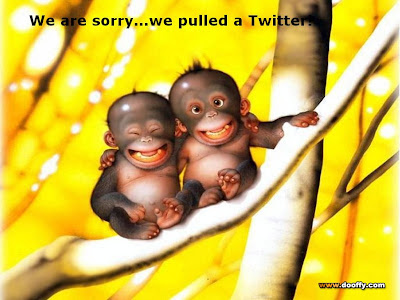
But Twitter is not the only startup having issues. It is becoming common for me to experience crashes and outages in my daily routine of using various new web sites and services. There have been days that I have seen four sites down at the same time. It is getting so common that I started creating a collection of screen shots.


Technorati has been struggling recently with a surge in web traffic. Countless other startups have flashed their cute crash messages on my screen. To me, the joke is on them. It's no wonder that the corporate architects of the world (me included) get a little annoyed when the media and talking heads start touting Web 2.0 and Mashups as the silver bullet for enterprises. Many have said that we should skip SOA because it is hard and time consuming and instead go the WOA route. I think Web 2.0, Mashups, and WOA are all great technologies, but when they are applied to an architecture that does not scale or do not follow some form of governance to assure some level of QoS, then you will likely need to design a cute outage web page to entertain your users as your team scrambles to bring the system back on line.

Here is one that I have created for any new startup out there.


I am going to regret ever trying this but I was talking with my friend Dennis Stevenson on Google Talk tonight and we were admiring how social networking has opened so many doors for us from a networking standpoint. In our conversation I mentioned half jokingly that all we need is to be able to send Tweets by phone. Then I remember trying out Jott several months ago which is a service that converts voice to SMS text messages from any phone. So I figured that I could hack up something to intercept the SMS text message to send to my blog which automatically feeds new blog posts to my twitter page.

When I went to Jott, which I had written off as a tool that I had no use for, I was pleasantly surprised to find that the smart folks at Jott where one step ahead of me. They already had Jott integrated with Twitter. I simply called the Jott number, said Twitter, and then spoke a short message. Within a few minutes I had a Tweet on Twitter with a tinyurl link to my message.

Then I found that Jott is integrated with Blogger, Wordpress, Google Calendar, and many others. Imagine being on the road and you remember that you have an appointment at 2pm the next day. You can call the Jott number (mine is voice activated) and tell Jott to call Google Calendar. Then simply speak into the phone to set up your appointment in your Google Calendar and you are done.

I probably will now be responsible for many car accidents for sharing this. But seriously, the possibilities with Jott are endless!

In the .Com days companies were built overnight and threw together web based systems without a lot of thought about architecture and planning. Many of them crashed and burned and left investors with empty pockets and sent day traders back to their full time jobs. Now we are in the Web 2.0 days and I see this pattern developing again. New websites are popping up everyday as the social networking craze races across the globe. Don't get me wrong, I am a huge fan of Web 2.0, especially the social networking aspects of it. But just like in the .Com days, there is a huge race to be the dominant web site like Twitter who attracts millions of users with the hopes of being bought by Google or Microsoft. Once again, architecture seems to be an afterthought. Twitter, who has being growing at a rapid pace, went from the web darling to the site that is always down in the course of a few short weeks. But this is a pattern that is not unique to Twitter. I have saved a few screenshots of cute little error messages that I frequently get when I use all of these hyped up web sites.


I wish these companies would spend as much time on capacity planning and architecture as they do coming up with "funny" error messages. They are only funny to me when they are rare. I have seen the whale way too many times and if the"Monster gets lost" one more time I won't be back.

When it comes to stability and reliability, there are no shortcuts. If you are not careful you might wind up like Twitter. Last month they looked like a multi million dollar website that was changing the world and on the verge of making its founders millionaires. Now they are struggling to keep their customers as their system fails to keep up with the demand. This has opened the door for some other startups like Friendfeed. Hopefully they invested in architecture so they don't run into the same issues when the masses flee Twitter and open up accounts on Friendfeed.

The moral of this story is that architecture is critical for sustaining success for any software product. You can pay now and build it right up front, or you can pay later and call in the firefighters and the PR folks.

I was poking around on Slideshare today and stumbled across a few good presentations about Twitter. If you run into any folks that still don't understand Twitter, show them the following content.


Here is the Video that the presentation referred to:


The next presentation is a long one but discusses how Twitter can be used in business.

Web 2.0 social software and collaboration tools have drastically changed the way I work and learn. Whether it is social networking tools like LinkedIn, Facebook, and Twitter or information sharing tools like blogs and wikis, access to information and lessons learned have never been easier to find. I have worked at the same place for 13 years and had a very limited network until I started using these tools. Now I am collaborating with smart people all over the world. I recently was contacted via Twitter to participate at the Gartner & SOA Consortium “User Panel: Measuring the Value of SOA”. This opportunity never would have occurred if I had not taken advantage of Web 2.0 technologies.

What I am discovering is that these technologies are still very foreign to many people in the industry. Others are aware of the technologies but have written them off as child's play and see no value in them. Meanwhile, the world is changing and the way people communicate is radically different due to these technologies. So I have been wondering out loud why so many people are in the dark? Here are the conclusions that I came up with.

  1. Some people see work as a 9-5 necessary evil and are not motivated to learn new skills and keep current with technology.
  2. Some people (especially us old timers) are resistant to change. They insist on using the methods that have worked for them for the last 20 years.
  3. Some people fear change. These people are comfortable with the way things are and fear becoming obsolete if their daily routine changes.
All of these things are concerning to me if I am putting a team together to implement a new technology or to change the current way we deliver. To combat this I added a series of questions to my interview process. I wanted to find out if and how the candidates research trends in technology, if they are familiar with the tools that the younger generations are using, and how adaptable they are.

Whether I am interviewing existing employees to build a new team or potential new hires from outside the company, I now try to see how aware they are of how the web is changing the way information is shared. Here are some of the things I might ask:
  • How do you keep current with technology?
  • What tools do you use to collaborate?
  • How would you go about researching how to implement SOA?
  • What was the topic of the last technology article you read?
  • What is one of the most exciting new tools on the web today?
There are many more questions that could be asked. If their answers are I use email and trade magazines then they probably are not keeping themselves current. If they are unfamiliar with blogs and wikis then they are definitely old school and further questioning is needed to make sure they don't resist change.

I remember when I first stumbled across Twitter a year ago. I just couldn't understand the value. As time went by I noticed more people in my network were becoming excited about it. I could have dug my heals in and said, "I have managed to survive all of these years without it" and just ignored it. Instead, I created an account and started using it. At first it seemed like a waste of time but as I started following the right people my eyes opened to a whole new world of communicating. Now I can't live without it.

So my point to all of this is if you are in a position to put together a new team or hire new people, do you want people who aren't ready and/or willing to change the way they work or do you want people who are comfortable adapting to new ways of thinking? A quick way to gain insight into which side of the fence these people sit on is to test their Web 2.0 knowledge. If they can tell you more about their favorite reality show then they can about Web 2.0, move on to the next candidate!


Lately I have been getting a ton of calls from recruiters who are looking for some really smart people for various technology jobs. I don't know where they are getting my name from but they all know that I have a very solid network of talented people. Most of the jobs are in the North East or the West Coast. I am in Florida and have no plans to leave the Sunshine State any time soon. The gentleman who called me today said, "I was told that you are the guy to call because you know a lot of people in IT". That got me thinking. Between my connections on ITToolbox, LinkedIn, Plaxo, Facebook, and Twitter, I have about 500 IT people in my network with various talents. Why not share these opportunities with my friends and colleagues? I sent out a couple Tweets on Twitter but I want to try out this blog for a new way to share job leads with my network.

So if you are a recruiter or employer and are looking for some good people, shoot me an email (mkavis@yahoo.com) or a Tweet (madgreek65) and I will start a weekly post on job openings. This is totally free for both the talent seekers and the job seekers.

Here is my motivation. I have been contacted on some very attractive, high paying positions in states that I cannot move to. I would like to give those in my network an opportunity to inquire about these jobs that are typically not posted anywhere. Also, I would love to build a trusted network of recruiters and employers. You never know when they might return a favor for me or for someone I know.

So here is an attractive job that I sent out on Twitter today:

Recruiter called and is looking for IT Director for small loyalty marketing co. in Rochester, NY. Call Alan 732-463-1414.

I will send job notifications like this out on Twitter when I get them and will have a weekly post that summarizes all of the jobs I hear about during the week (if I get any). Currently I get 2-3 calls/emails a week on average. If you know any recruiters, forward them this post. If you are looking for a certain job opportunity, let me know so the next time they call about a particular job I can send them your way.

If I get enough people participating, I'll create a new blog dedicated to sharing job leads to connect recruiters with talented IT people. If I don't, no big loss. Let's give this a try. It is so hard to get your foot in the door these days. It is all about who you know and who can get your resume passed the paper shredder in HR. All I ask in return is that you check out my blog every now and then!

I received a call from a recruiting firm today for an EA job in Maryland. Maryland is no place for a die NY Giants fan like me! I told the guy thanks, but no thanks. He asked if I could pass the job description out through my network. He said he knows that us EA types stick together in packs (like wolves I said). So I told him to email me the job description and I would send out a quick Tweet to my network.

Then I started to wonder. Why are recruiters not using Twitter? Think of the time they could save calling, emailing, and searching for candidates if they could create a Twitter account for EA jobs and start connecting to candidates. Twitter messages are viral. One Tweet with a link to a job description and the recruiter could have his phone ringing off the wall. All candidates would have a ton of content on the web (blogs, tweets, etc.) which could easily serve as the first screening process.

What do you think? Am I on to something or is this already happening?

By the way, drop Anthony Johnson an email at johnson@fitzdrakesearch.com if you want details of the job.


When I first stumbled upon Twitter a year ago, I just couldn't understand the attraction behind it. I did notice that millions of people were using it so I decided to pay attention to it. Experience tells me that anytime a million people start to use a tool on the web, somebody is eventually going to figure out how to use this in business to make money. After reading about Twitter for a while I still wasn't finding the need to Tweet. But unlike many people my age and generation, I did not brush it off as a nonsense tool. Instead I created an account and started using it. I just started following a couple of blogger friends of mine and found that this tool has some potential. The value of Twitter increases dramatically as more people are added to your network, both followers and followees. I also stumbled across an article called Twitter Tools, Tweaks, and Theories which has opened my eyes to more possibilities. I won't repeat the article here but there are many valid uses for Twitter beyond discussing what you had for breakfast. This article called Why Twitter is Significant also provides a good perspective on why this is more then a fad and a toy for the younger generation.

My goal is to have a 100 followers and to follow a 100 people. Once I get there I will post a Twitter lessons learned. I have added a Twitter Widget to my blogs for you all to follow. Check it out. I added a funny Tweet today about a bad security practice I witnessed today.


I have been experimenting with a few Web 2.0 tools at work over the last few months. We are working on a big BPM/SOA initiative and are trying to find better ways to communicate what we are doing to a very large audience. Email is becoming more and more useless everyday as a tool for information sharing. We are using a combination of Blogs and a Wiki to improve collaboration and knowledge sharing. We are also formalizing our SOA governance processes. A small team of about eight people are working on defining and publishing certain processes and standards. This effort requires a great deal of collaboration and in an effort to "eat our dog food" we will rely solely on our Web 2.0 tools to carry out the collaboration. No email allowed on this initiative!!!

After reading many interesting blogs recently and seeing how other companies like IBM are starting to leverage these tools, I am going to take my experiment to the next level. Up next, Twitter. When I first heard about Twitter a year ago, I couldn't understand how it would be useful for me at work. I could see the momentum building as more and more people starting signing up for this free service which led me to believe that it would eventually find its way into corporations.

In my role as the chief architect, I am often working on various projects or research efforts that most people in IT do not have much visibility into. Most people in applications development work on a specific group of applications and don't have the luxury of time to see what's going on outside their world. At the same time, the architecture team is constantly getting feedback that we need to communicate more. We spend a lot of time presenting at team meetings trying to keep the company updated. The blogs have been extremely helpful getting information out. I think Twitter can be a great tool for "quick hit" communications. For example, in two weeks, we have the guys at Zapthink running their SOA Architect Bootcamp at our office for four days (register here). As I come across some good nuggets of information I could "Tweet" them and they will show up on my sidebar of my blog. After a full day session I can then provide a more detailed summary on my blog.

Here is another use case. Let's say that I am going to a board meeting to present a business case for the next significant SOA project. In the meeting I get the thumbs up to move forward. For the next three hours, I will sit through other presentations and attend two other meetings. I quickly pull out my iPhone and Tweet the news that the project is approved. Upon receiving the news, my project manager can then start moving forward.

I recently listed a number of events that I am attending and participating in. As I encounter interesting facts or viewpoints during these presentations, I can share them back at corporate via Twitter.

Think about all of the notes and action items that you write down in the old notebook that you tout around with you all day. Many of those notes could also be handled through Twitter. Having all of that information online and searchable is much better then thumbing through my coffee stained notebook, especially with my bad handwriting!

The use cases are endless. I am going to start experimenting with this next week and will share my lessons learned shortly after. I am also going to start researching different open source tools that provide similar functionality as Facebook. If you know of some good ones, please pass them on. I am also going to look at how Serena adopted Facebook as their intranet and see if that is something that could work for us.

Stay tuned for more on these experiments in the near future.

Subscribe to: Posts (Atom)

My favorite sayings

"If you don't know where you're going, any road will get you there"

"Before you build a better mouse trap, make sure you have some mice"