I have discussed the role of the SOA Evangelist and the importance of the architects. Today I will discuss the different developer roles and the characteristics that make a successful SOA developer.
In a traditional 3-tier architecture it was common that there was a presentation layer, a middle tier or application layer, and a data layer. In some cases, a single developer role was responsible for all three layers. In larger companies, there may have been specialized roles such as a UI developer, an application developer, and a database developer. In an SOA, the concept of an application is no longer relevant except from the standpoint of integrating to existing applications. With SOA, we should be building business services that are application independent. The following chart is one I have used in previous posts which shows a typical breakdown of some of the development roles required for SOA.
So let's talk about business services. A business service is the compilation of all of the work done by the collection of developers within each layer. For example, let's discuss a "Shopping Cart" business service like the one we use on Amazon.com. It is most likely made up of services and/or components that live within each of the various layers of the architecture. The presentation layer obviously contains the physical implementation which the user sees and interacts within the browser. The business process layer contains the logical flow of steps that walk the user through the checkout process from start to finish. The business rule layer contains rules about tax codes, discounts, memberships, etc. and the underlying data elements and structures are handled in the data layer. In many instances, companies have multiple data structures that serve similar functions due to mergers, acquisitions, years of legacy systems, 3rd party application purchases, and many other reasons. To abstract these different data structures and present a common data interface that hides the complexity of the physical implementation of the data, the data services layer exists (think master data management).
So to develop this shopping cart business service, all of the people working within the different layers of the architecture must collaborate to deliver the service in a way that it both meets the business requirements and the technical requirements as defined by the SOA Governance model that the company has adopted. Examples of the technical requirements might be...
- Adheres to WS-* security standards
- Data encryption policies
- Platform neutral implementation
- Meets specific performance requirements
Why do I bring all of this up? Because developers that will succeed developing in a service-oriented architecture need to have the following characteristics:
- Flexible, open to change
- Collaborative
- Able to work in a setting with peers reviewing their work
- Able to see the big picture
- Not married to a certain technology
- Able to withstand constructive criticism
- Innovative
Developers who are protective of their own work or of their technology of choice will likely struggle working on SOA. One of the goals of SOA is to build platform neutral software that is highly flexible, maintainable, and loosely coupled. To build software like this we must shift away from software developing and move to software engineering. In simple terms, we must move from drag and dropping to planning and modeling. We must embrace collaboration, peer reviews, and governance. If your developers don't like these requirements, they either need to change or leave. Otherwise they will be a cancer and will continously feed the forces of resistance.
Ok, off my soap box now. So let's discuss the roles. But before we do let me note that we are talking about roles and not individuals. In smaller companies, a developer may perform multiple roles. In larger companies we may actually see very specialized developers living within a single layer of the architecture. One last disclaimer: I am assuming that an architecture team exists and some form of standards and governance is in place within each layer.
UI developersIf your company can afford to specialize, this is the perfect layer for it. Developers in this layer do not necessarily have to be extremely technical. It is more important that they understand usability, UI standards, and web interface best practices. These people should be comfortable working in prototype mode where they can start with mockups and work closely with the business or business analyst to reiterate through the various visuals until an agreed upon format is approved. These developers must be able to talk to the business in business terms and understand how typical business users interact with web technology.
Business Process developersThere are two distinct roles in this business process layer. One role deals with
modeling business processes, the other role deals with
integrating business processes with the underlying services and systems. In some companies this role may be served by one person but more likely it will be two because of the difference in the skills required. The business process modeler may not even be an IT person. Some companies have a department that exists within the business that focuses on business process improvement and business process automation. This is the norm for companies that practice
Six Sigma or Total Quality Management (
TQM).
The
business process integrator is a technical role which requires expert experience working with Web services, REST, JMS queues or several other technical areas of expertise. The integrator is the person who connects business processes to the backend technologies which controls the overall flow of the business services and overall composite business application, often coined orchestration.
Business Rules developerThis one is a little fuzzier. Not all architectures have a distinct business rule layer. In some instances, the business rules are controlled in the data layer. For companies who have very dynamic business rules, especially rules that are customer centric and could be updated by end users and even customers, it makes a great deal of sense to abstract the business rules. If a company has a business rule layer and implemented a tool to manage business rules, it is highly likely that you will need technicians who govern this layer much like DBAs govern the database layer. In some case this might be an additional role for a DBA but it does not have to be. Whoever it is they must understand the concepts of abstraction and be looking for ways to empower the end user to react quicker to changes in the business. For example, let's say that a loan approval process requires state specific business rules about what percentage of capital is required from a loan applicant up front before the loan application can be expected. The frequency which this value changes varies by state and must be updated as soon as possible. The best scenario is to take IT out of the process and enable certain users (or systems) with the appropriate authority to update the values as necessary. Whoever is responsible for the business rules must be able to work with the business and/or business analysts to understand the frequency of change, the rights and permissions, and the impacts of the various business rules. There is an amount of overhead associated with creating and managing rules and the person in charge must understand the trade offs.
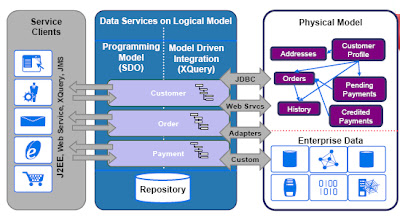
Data Services developerMaybe a better name for this person is an information architect. The person in charge of this function is responsible for abstracting the underlying data layer and exposing it the other layers of the architecture and even externally to other systems. For example, let's say that our shopping cart business service allows multiple forms of payment (American Express, Visa, and Pay Pal). In addition, the different products purchased (books, DVDs, clothing, etc.) are managed from different inventory systems. To hide that complexity and to allow us to add additional payment services and inventories with ease, we leverage data services to present the shopping cart service with a logical view of the data. In other words, we create a standard payment and inventory message that the shopping cart communicates with. As long as the shopping cart communicates with these standard messages, the underlying physical implementation of the different payment and inventory services are irrelevant. The shopping cart service simply communicates these messages in the standard format it knows and the translation from the standard message to the physical layout of the receiving systems or services is performed in the data services layer.
(This slide is from BEA)
Developers or architects within this layer must have exceptional technical knowledge in the area of data modeling and database design. If the company has a tool to manage this layer (which is highly recommended) then an administrator is also needed.
Database developersThis data layer is typically an area that already exists today within each enterprise. This is where the DBAs live. With SOA, the DBAs must work extremely close with the developers within the other layers of the architecture. They must understand the performance and security requirements of each layer and ensure that the underlying data model meets the needs. Since legacy integration is common in many SOA implementations, DBAs are often called upon to create views or structures or even establish new ETL processes to provide a common view of data to expose to the other layers of the architecture.
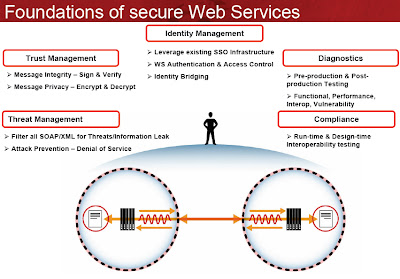
Security developersThe security experts may not actually do the development but there must be a person or group of people who understand the new security challenges that SOA introduces. SOA can introduce the following new threats:
- Expose components of legacy systems that were never designed to live outside the firewall
- Require trusts between multiple internal/external systems without additional sign-ons
- Send a single message to multiple partners each with their own distinct security requirements
- Expose credit card and other privacy related data out on the web
(This slide is borrowed from the following
presentation from Mamoon Yunus of Forum Systems)
Todays n-tier security models are not enough when dealing with B2B type SOA implementations. The developers in this area must have a deep understanding of communication protocols, security best practices, web architecture, regulation (ie. HIPAA, SOX, PCI) and WS-* or other standards.
SummaryAs you can see there are many distinct developer skill sets required to implement SOA properly. Trying to find a person that can master each layer is not realistic. If you have this person, it is likely that he or she is on your architecture team. The beauty of this architecture is the ability to divide and conquer the problem within each layer. A single business service can be worked on by numerous people within each layer. It requires solid governance, strong collaboration skills, and
teamwork to work this way which is why it is critical that the right team of people is assembled to tackle SOA. My next post will discuss the testers and their relationship with the development team.